The Untourist Journal · Yucatán Experiences
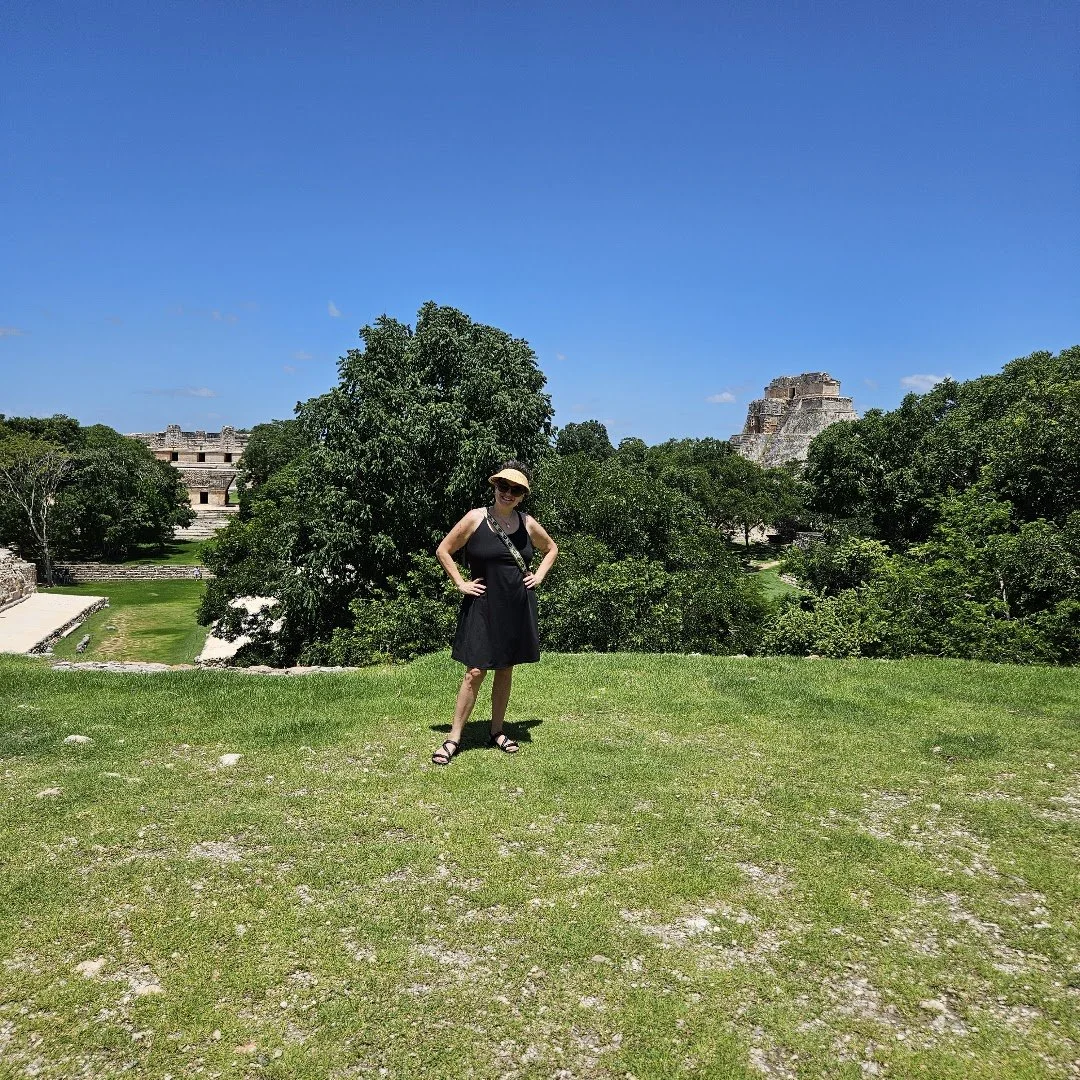
I spent a Saturday at Uxmal with the Women's Mérida Club, and the part I keep thinking about is not one perfect photo. It is how much more the city revealed once we slowed down and listened.
We left Mérida at 9:00 AM and began our guided tour around 10:20. By then, the day was already warming up, our guide was ready with stories and maps, and I was wondering why I had waited so long to come.
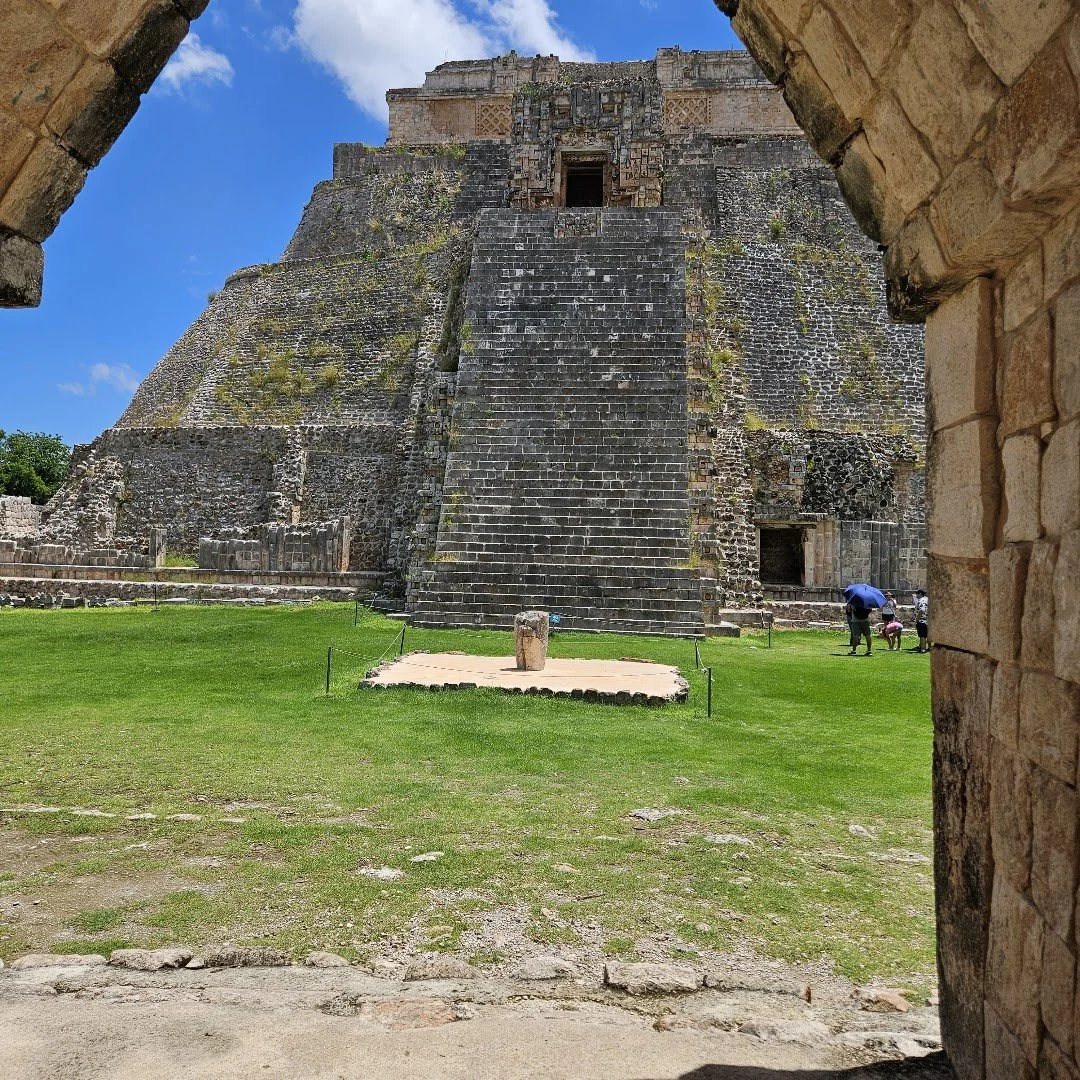
I had seen the Pyramid of the Magician in photographs, of course. What those photographs never quite capture is how Uxmal unfolds around you: a doorway framing a temple, a carved face hiding in plain sight, a courtyard that answers when you clap.
The short answer: yes, Uxmal is absolutely worth visiting from Mérida. Go for the architecture and history, but give yourself enough time to notice the details. This is not a place I would squeeze into an overpacked day.
What surprised me most about Uxmal
Uxmal feels monumental without feeling impossible to take in. The Pyramid of the Magician rises above the trees, but the smaller moments kept pulling me in: stone mosaics, long sightlines, open courtyards and buildings that seem to change as you walk around them.
Going with the Women's Mérida Club made the day feel less like a sightseeing assignment and more like a shared discovery. We could stop, ask questions, compare what we noticed and laugh when someone spotted the detail the rest of us had walked right past.
That is also why I am glad we hired a guide. Without context, it is easy to see a wall, take a photo and keep moving. With context, the same wall begins to tell you about water, belief, power and daily life.
What does the word Uxmal mean?
The meaning is not completely settled, which honestly makes the story more interesting. INAH notes that Uxmal is traditionally interpreted as “three times built,” possibly referring to periods of occupation and construction.
Our guide shared another idea that stayed with me. The Yucatec Maya word ux can relate to harvesting, giving Uxmal the sense of a place where crops were gathered abundantly. He explained that people left the area in search of water and later returned because the soil here was so productive.
That tension—fertile land, but no easy water source—helped the rest of the site make sense. Uxmal was not simply beautiful. It was resourceful.
Why rain is written all over the buildings
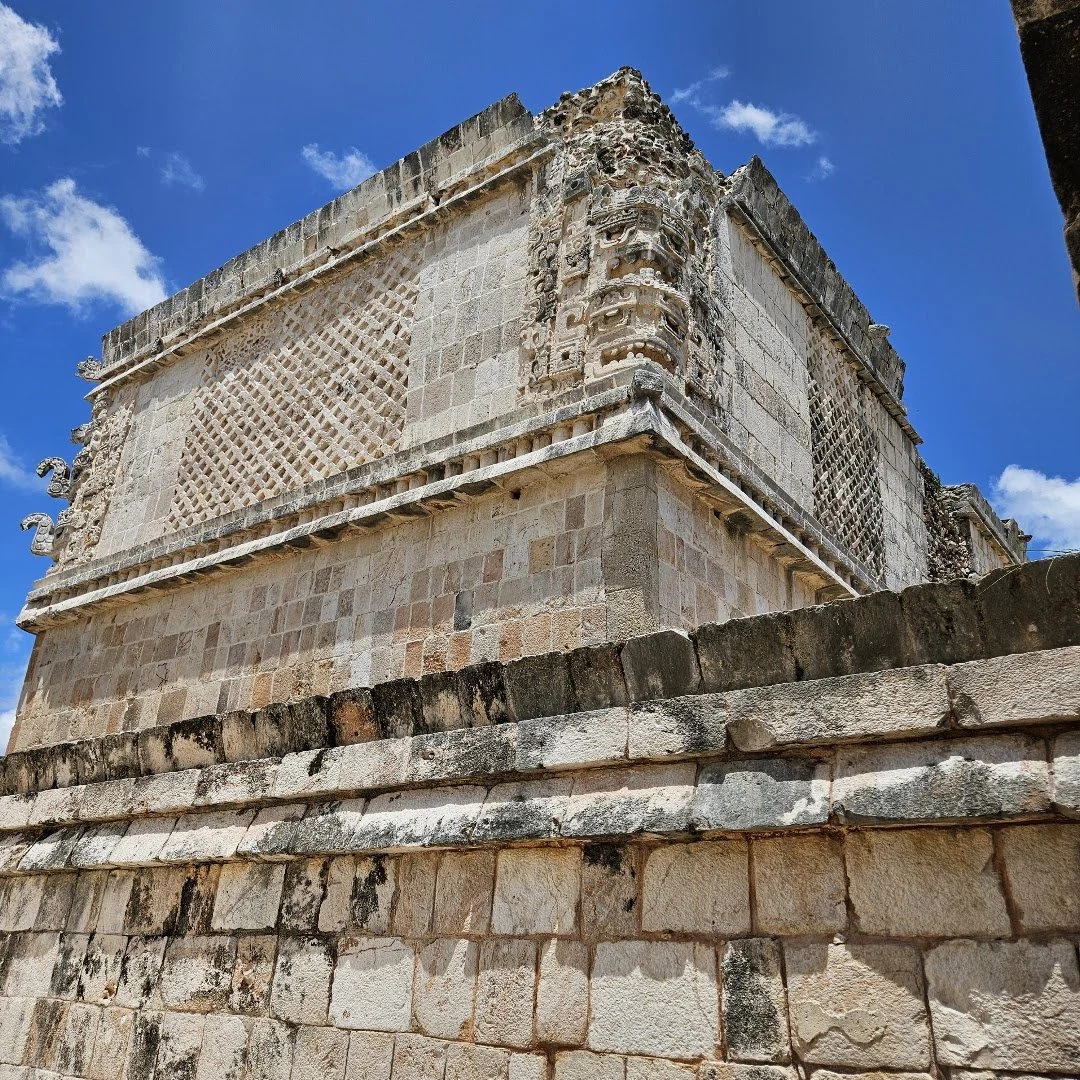
Look closely at the decorated upper facades and you will see repeated masks of Chaac, the Maya rain deity. Once our guide pointed them out, I started seeing them everywhere.
They mattered because this part of the Puuc region does not have nearby cenotes or dependable surface water. Rain was not a nice extra. It was survival.
The Maya built underground cisterns called chultunes and shaped paved or sloping areas to direct rainfall into storage. The carvings stopped feeling like decoration alone and began to feel like reminders of the thing everyone depended on.
The best part of hiring a guide was realizing how much I would have walked past without knowing what I was seeing.
Do not forget to clap
When you reach the Nunnery Quadrangle, stop and clap once. The stone walls send back a distinct response.
It is such a simple thing, but it was one of those moments that made the city feel alive. You are not only looking at the architecture; for a second, you are hearing it.
Our guide also explained that the grand area around the temples belonged to Uxmal's elite, religious and political life. Most residents lived beyond the ceremonial center. That helped me picture Uxmal as a working city, not just a collection of impressive buildings.
He told us that it has taken roughly 95 years of clearing and conservation work to reveal the five principal buildings we visited, and that work continues. What we see today is only part of a much larger place still being studied and protected.
What should you see at Uxmal?
Pyramid of the Magician
The structure everyone recognizes—and somehow still more impressive in person.
Nunnery Quadrangle
Richly decorated facades, a beautiful courtyard and the place to try that clap.
Governor's Palace
Puuc stonework, long lines and details that reward a slower look.
House of the Doves
Known for a roof comb that early observers thought resembled a dovecote.
During our visit, the stairs and principal structures were not open for climbing. I know it is tempting when you have seen older photos of people at the top, but the restrictions protect the stonework. The view from the ground is still worth the trip.
How long should you spend at Uxmal?
Our guided visit lasted about two hours. That was enough time to see five principal buildings and hear the history without turning the experience into a race.
Here is the advice I would give a friend: arrive at 8:00 AM if you can. We left Mérida at 9:00 and started our tour around 10:20, which meant the heat was building while we walked. Earlier would have been cooler, quieter and more comfortable.
I would also resist the urge to cram three major stops into the same day. Leave room to step back, find a little shade, take the photo and then put your phone down long enough to really look.
Lunch, chocolate and a very honest confession
After Uxmal, we drove farther up the road for lunch at a local place, then returned to visit Choco-Story across from the ruins.
We did not have enough time for the full museum experience, so we walked the grounds and visited the gift shop. Next time I would start earlier and leave the complete Choco-Story tour in the plan.
If you love chocolate and coffee, you will probably love this stop. I do not like either one—yes, I know—but my husband does. So I came home with chocolate bars and whole coffee beans for him because we grind our coffee in this house. That is marriage and travel planning in one shopping bag.
Even without the full tour, it was an easy, relaxed ending to the day and a good reminder that a worthwhile itinerary needs breathing room.
Uxmal or Chichén Itzá?
I would not call one “better.” They tell different stories and feel different on the ground.
Chichén Itzá is the name more travelers recognize. Uxmal is the defining city of the Puuc region, with its own architecture, landscape and rhythm. If your trip allows, visit both—but give them enough space that they do not blur into one long day of ruins.
If you can choose only one, I would base it on your route, your interests and how you want the day to feel. That is always more useful than choosing by fame alone.
So, is Uxmal worth it?
Yes. Not because you can collect a famous photo, but because Uxmal rewards curiosity.
Ask what the stonework means. Notice how water shaped the city. Clap and listen. Give the place enough time to become more than the image you expected to see.
That is what being an Untourist means to me: not avoiding well-known places, but experiencing them with more attention and less rushing.
Plan with current information
Check INAH's official Uxmal visitor information for current hours, fees and rules. For historical context, see UNESCO's Pre-Hispanic Town of Uxmal page. If you want to add the cacao experience, review Choco-Story Uxmal's official information.
Want to experience Yucatán without turning the planning into another job?
Tell me how you like to travel. I will help narrow the choices, shape a realistic pace and coordinate the details so you can be present for the part you came for.
Start Your Trip InquiryHours, fees, access, site rules and available services can change. Confirm current information with INAH before traveling. Planning, booking and in-trip support depend on the service scope agreed before work begins.